
The portal shows the antenna, not the vehicle
Power, installation and operating context stay invisible.
Telemetry and AI for Starlink fleets
Telemetry, diagnostics and artificial intelligence for vehicle fleets connected by Starlink. The reseller's operations center knows whether each vehicle is online and, when it isn't, the likely cause, before the customer calls.
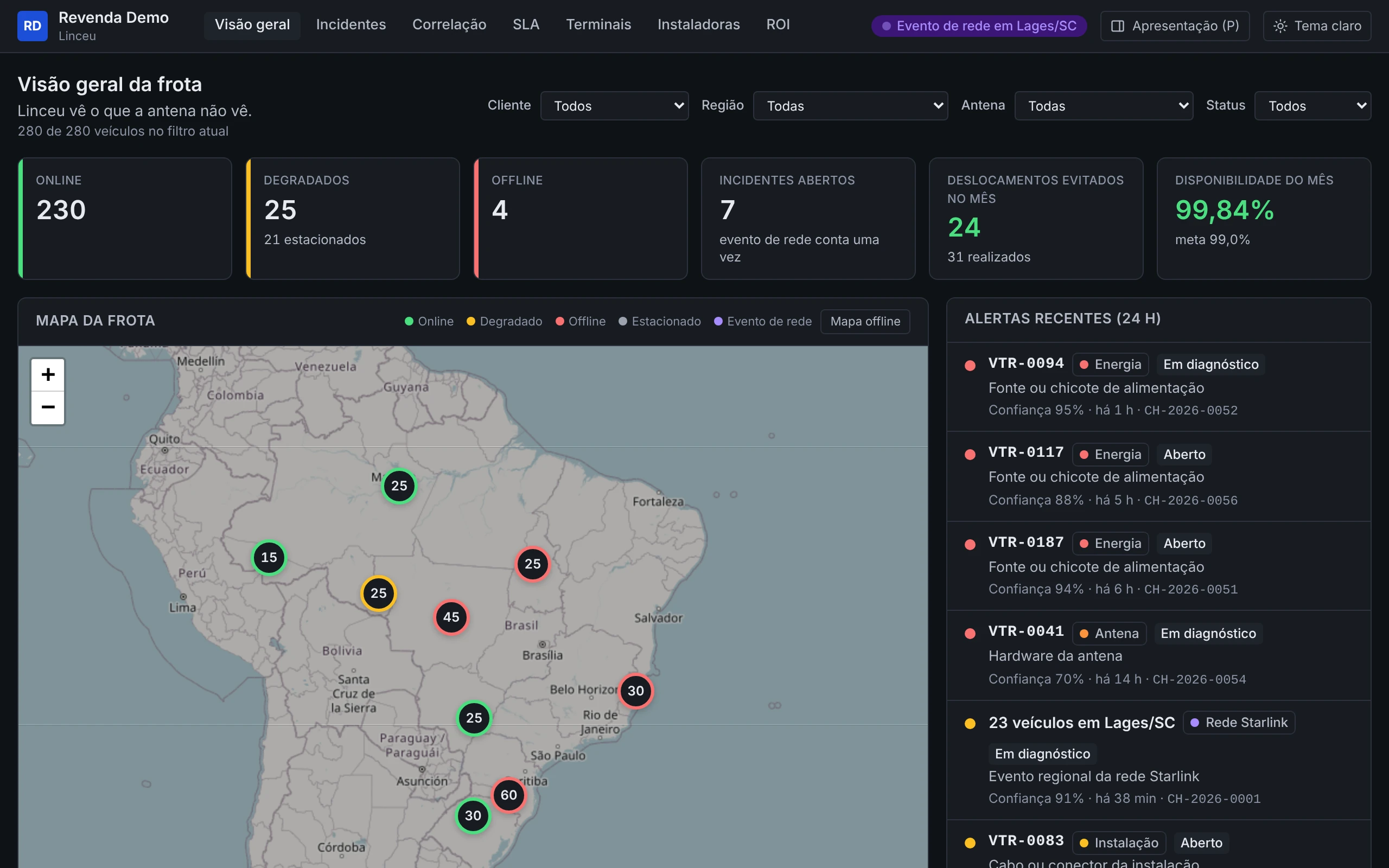
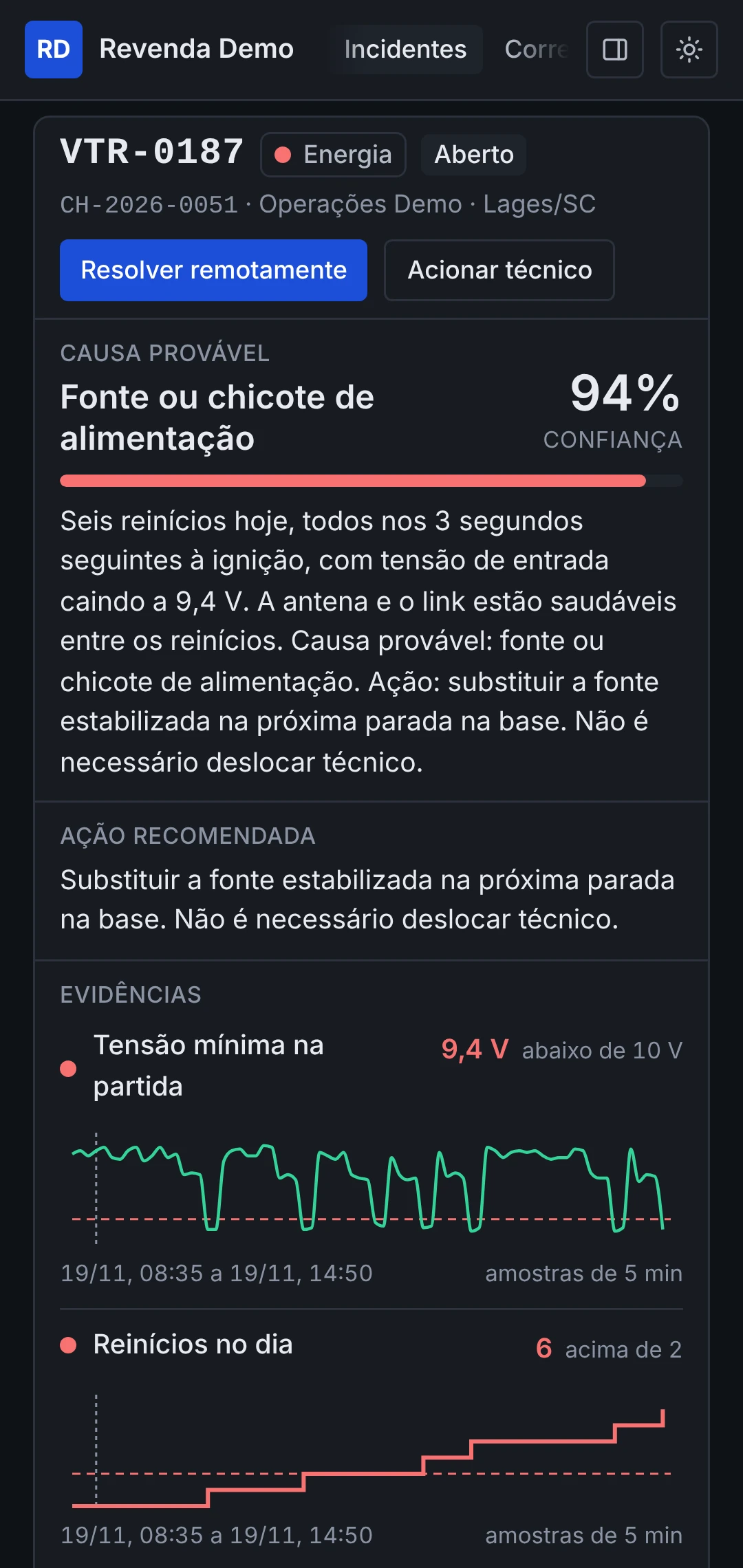
Illustrative screens with fictitious data from the demo version. Interface shown in Portuguese.
The failure could be in the antenna, the power supply, the installation or the Starlink network. A technician drives out, often swaps an antenna that was working fine, and the cost lands on the reseller or the customer.
Power, installation and operating context stay invisible.
The customer has no data to dispute it, and the reseller has no data to defend itself when the fault is on the customer's side.
Some public tenders in Brazil already require replacement within 72 hours in urban areas and 120 hours in rural areas. Without knowing about a failure before the ticket is opened, the deadline can't be met.
Starlink lines keep billing while the vehicle is parked or has no antenna. Nobody checks.
How it works
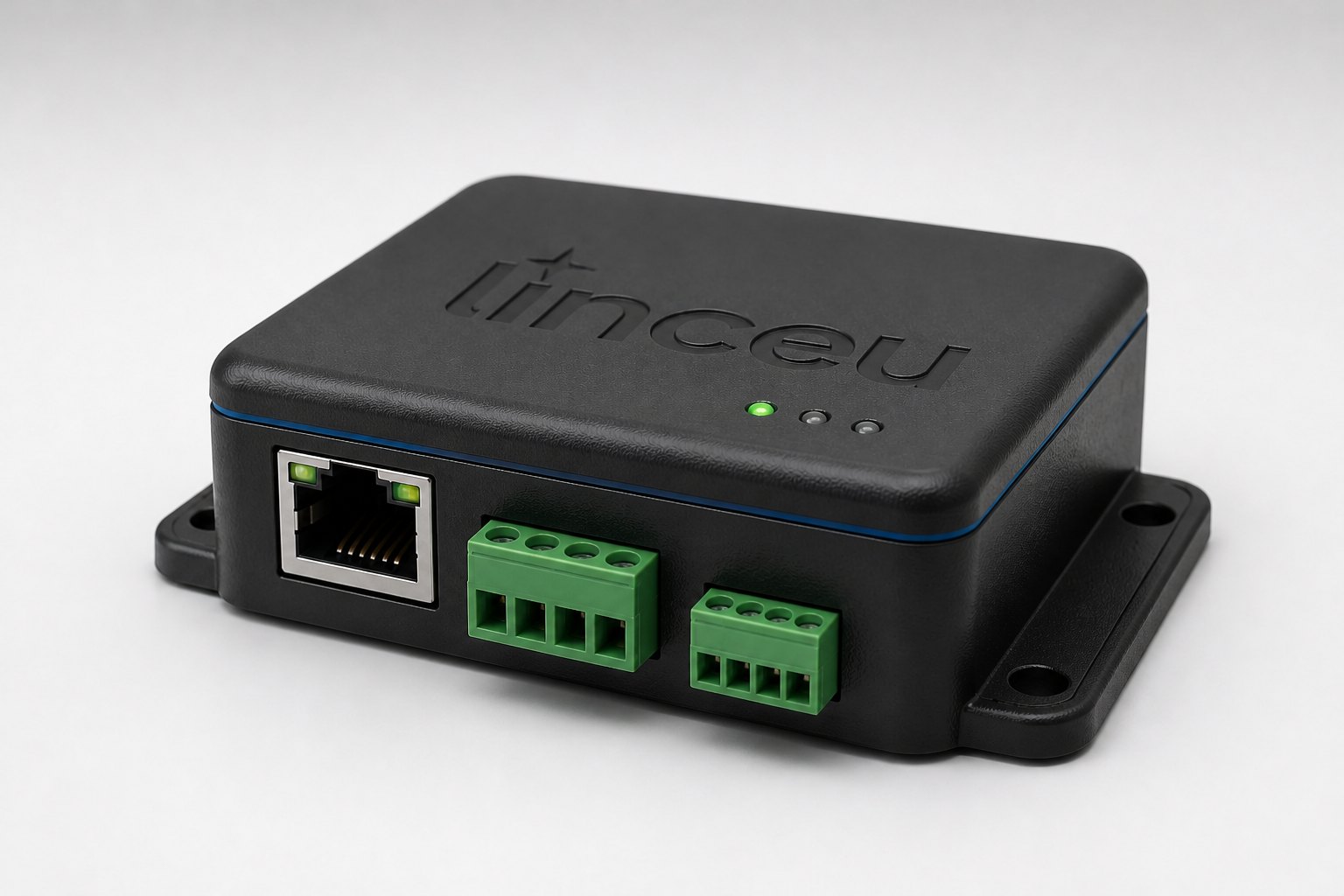
Wired to the kit's router and powered by the vehicle's own harness. It reads the antenna (status, throughput, latency, obstruction, alerts and reboots) and the kit's sensors (voltage before and after the converter, temperature inside the case, vibration, ignition and GPS). No radio of its own: data travels over the Starlink link already in the vehicle.
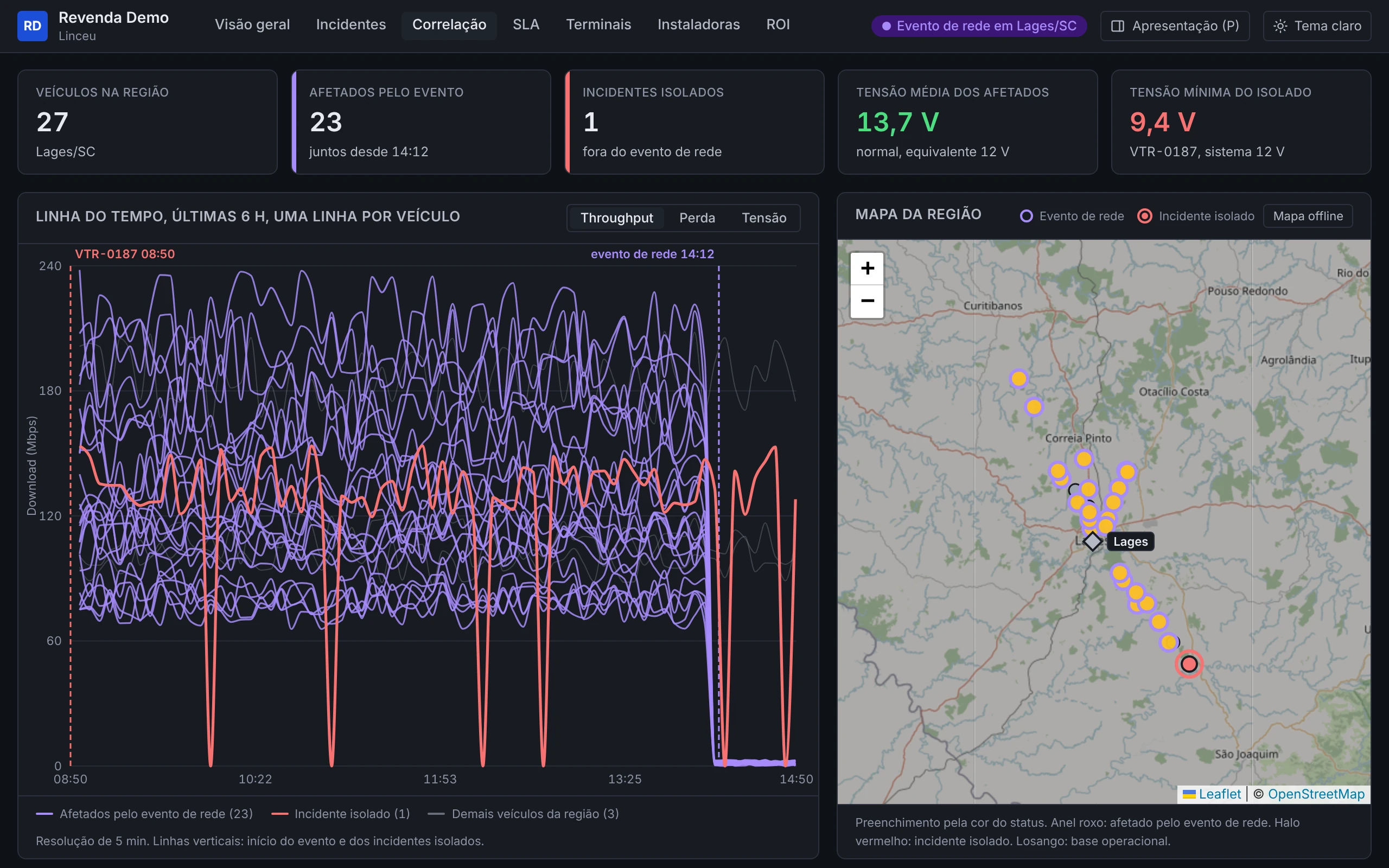
Time series per vehicle and per fleet feed AI models that correlate events and learn each vehicle's normal behavior. Ten vehicles dropping at once in the same region point to the Starlink network. A single one, with a voltage drop at engine start, points to the power supply or harness. With history, predictive models identify the patterns that precede a failure and raise the alert before the vehicle goes down.
The reseller's operations center gets the alert with the likely cause, the evidence package and the recommended action, before the customer calls. The technician only goes out when the cause requires it, already carrying the right part.
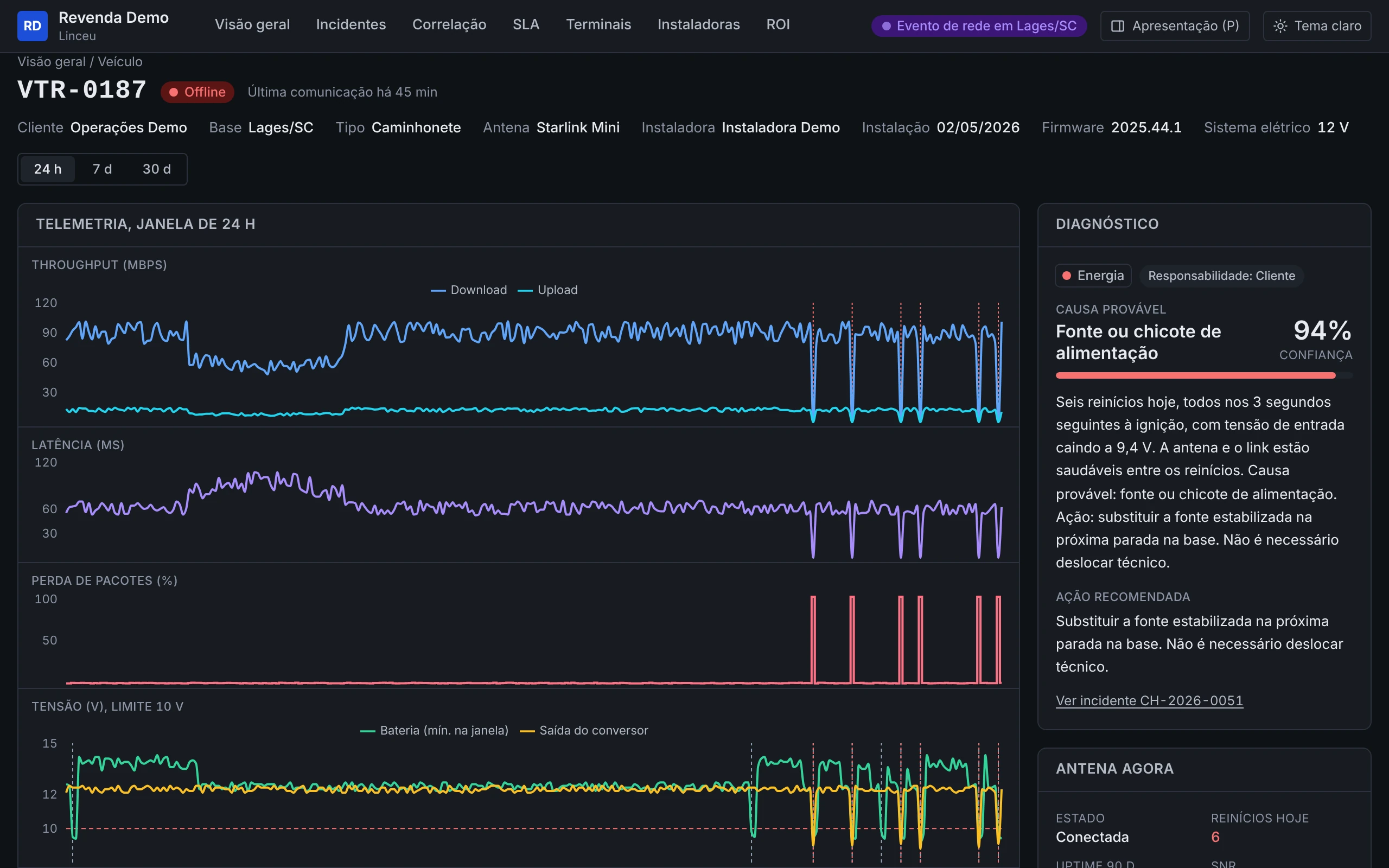
Supported antennas: Starlink Mini, Standard V4 and Flat High Performance. The antenna reading is the same on all three; what changes is the power measurement point, which sits inside Star2Go's power kits.
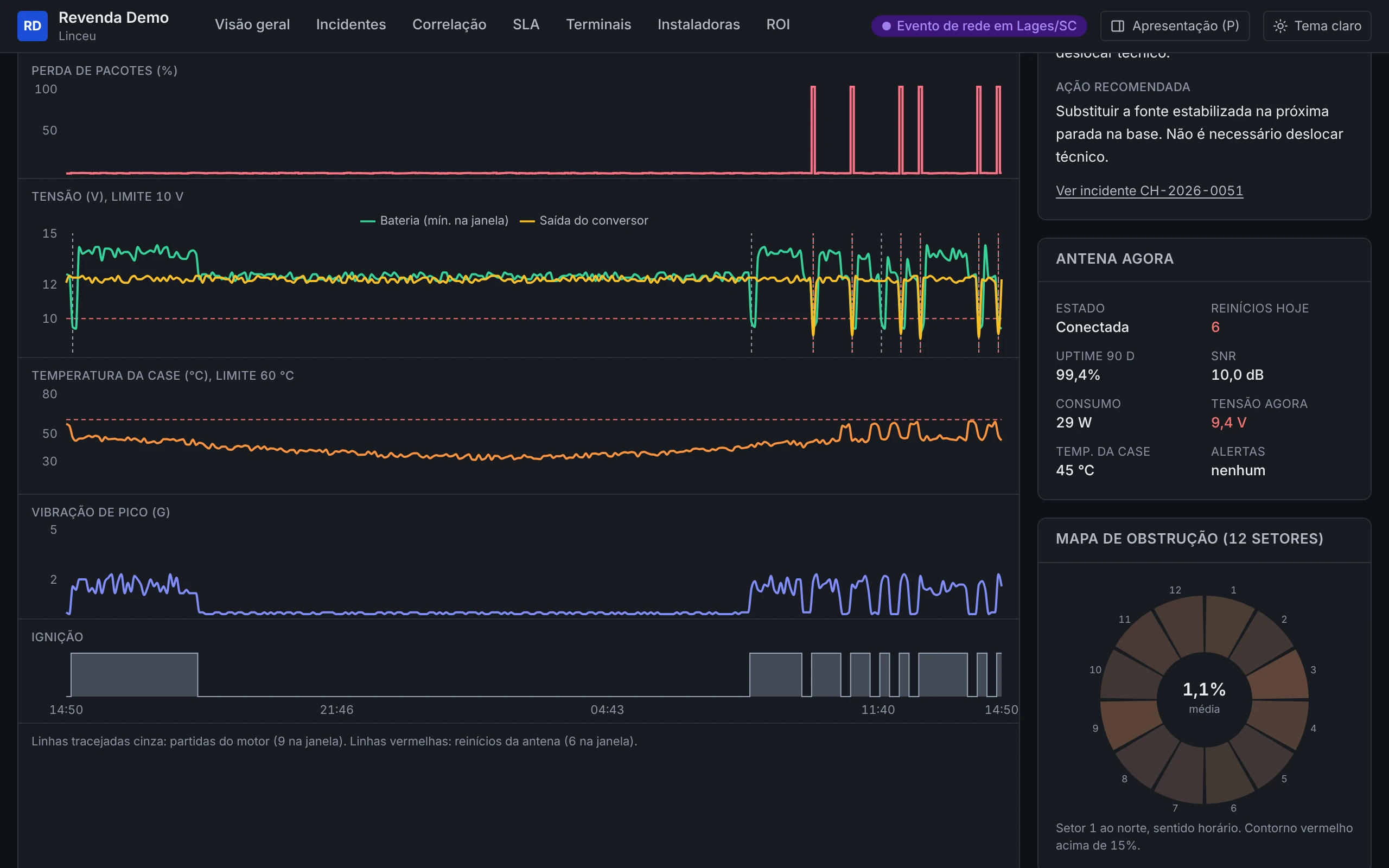
Illustrative screens with fictitious data from the demo version. Interface shown in Portuguese.
Intelligence
Telemetry on its own produces data. Linceu uses AI to analyze that data and deliver intelligence for decision-making: which vehicle to handle first, whether a technician needs to go out, which part to bring and which vehicles are showing signs of failure.
Models cross antenna, power, installation and network data to point to the likely cause of every outage, without anyone having to watch the portal.
Predictive models recognize the signals that precede a breakdown, such as voltage degradation, growing obstruction and recurring reboots, and warn before the vehicle loses connectivity.
Every alert arrives with the likely cause, the evidence and the recommended action, so the operations center can decide what to handle first and when a technician needs to go out.
Availability by vehicle and by customer, recurring failures and unused lines, consolidated to plan maintenance, equipment replacement and cancellation of idle terminals.
The more fleets on Linceu, the better the models. Training uses only aggregated, anonymized data, with full isolation between resellers.
For resellers
Resellers sell Linceu under their own brand, as a per-vehicle line item in their proposals. The end customer accesses a portal branded by the reseller.
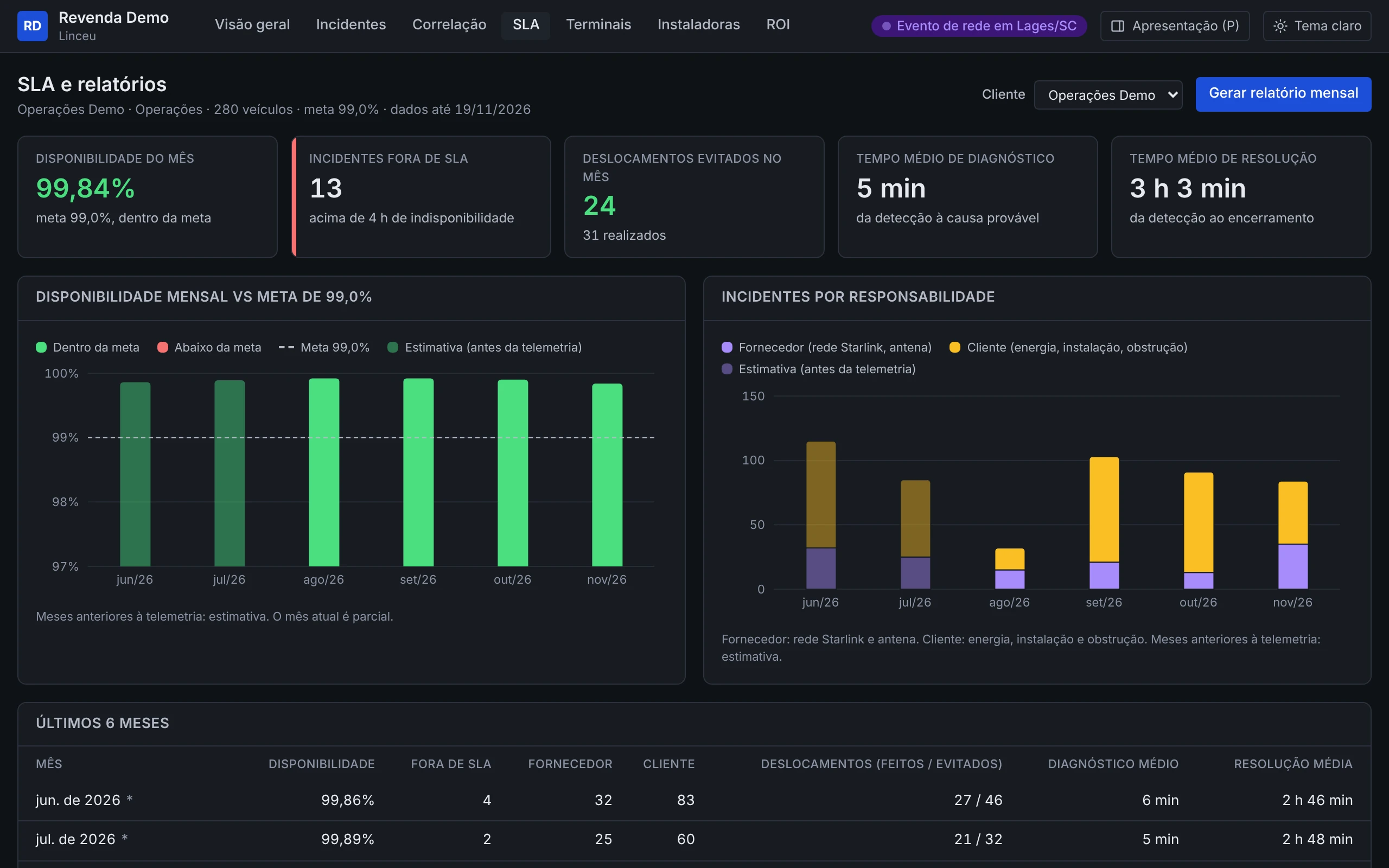
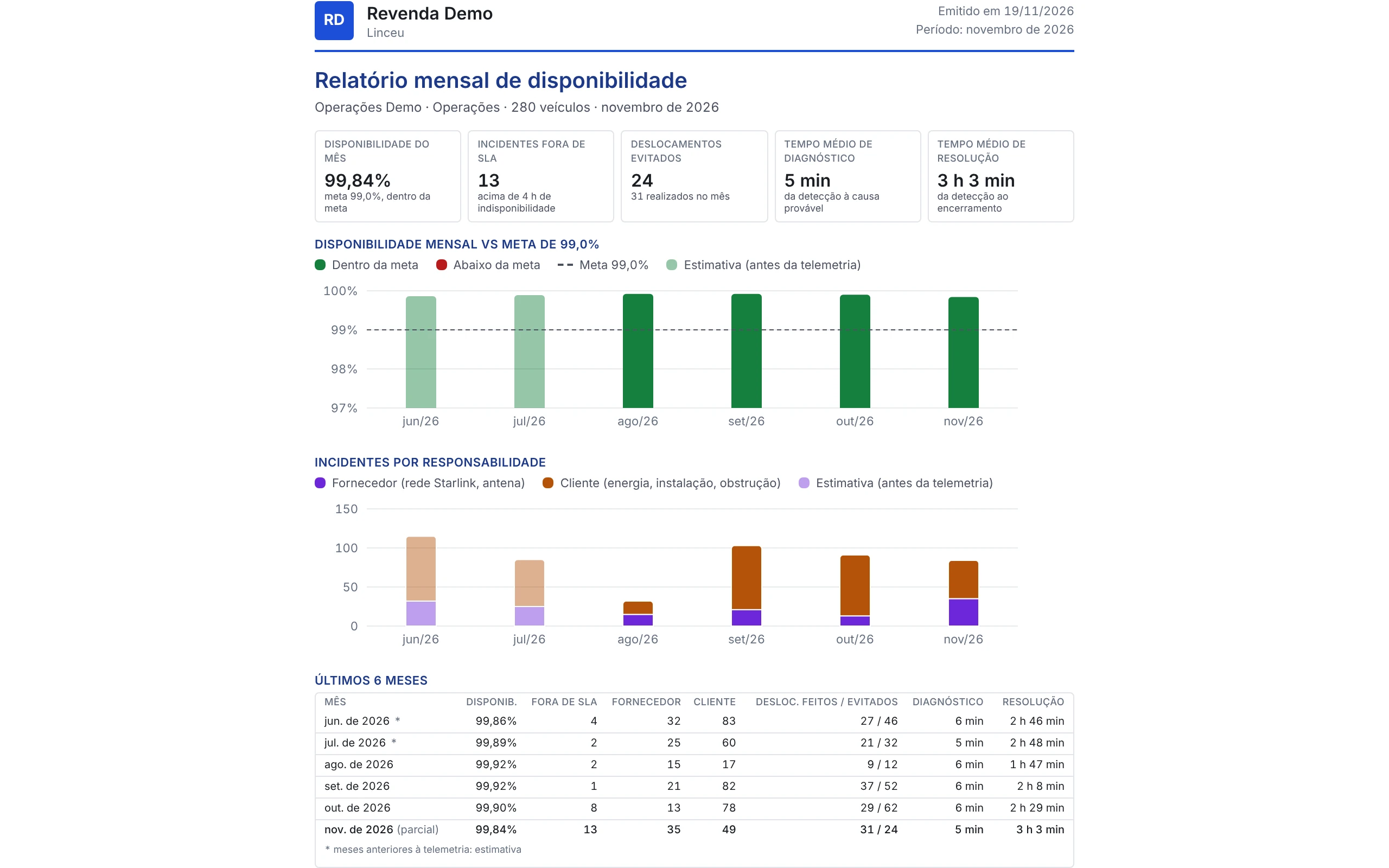
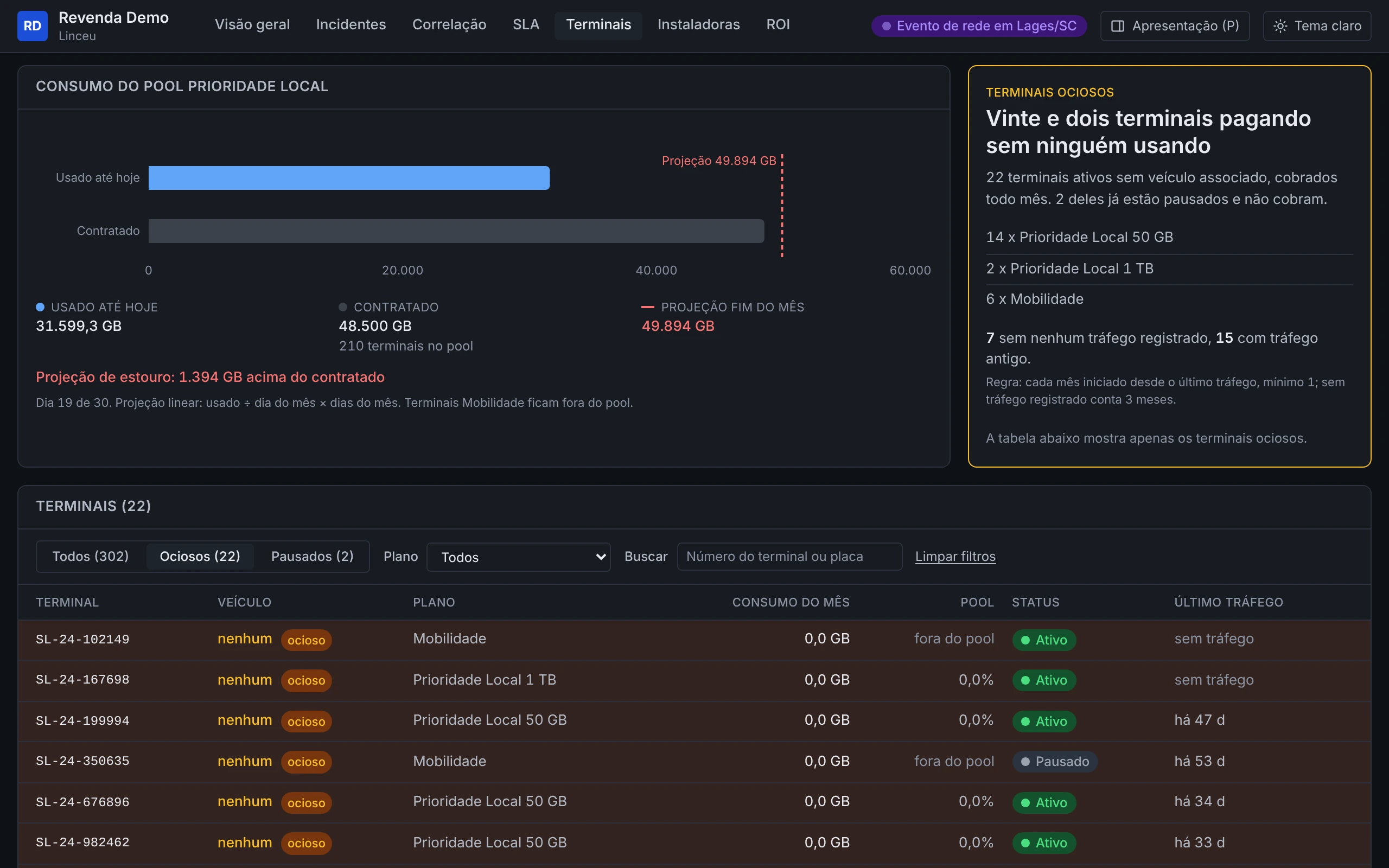
Illustrative screens with fictitious data from the demo version. Interface shown in Portuguese.
Sold as hardware or provided on loan, alongside the vehicle kits the reseller already buys.
Recurring contract with the reseller.
Linceu doesn't sell connectivity and doesn't approach the end customer.
Commitments
Why now
In Brazil, corporate fleets with Starlink already number in the thousands of vehicles. Existing tools see the antenna or the router, but don't cross antenna, power and installation data for each vehicle. Linceu fills that gap: low-cost hardware born inside the vehicle kit, AI-driven root-cause diagnosis and distribution through the resellers that already buy the kits.
Linceu is the Portuguese name of Lynceus, the Argonauts' lookout, famous for eyesight that could see through wood and stone.
Linceu is in development. Pilots run with resellers that already operate Starlink fleets, to validate the diagnosis in the field.
FAQ